The verdict
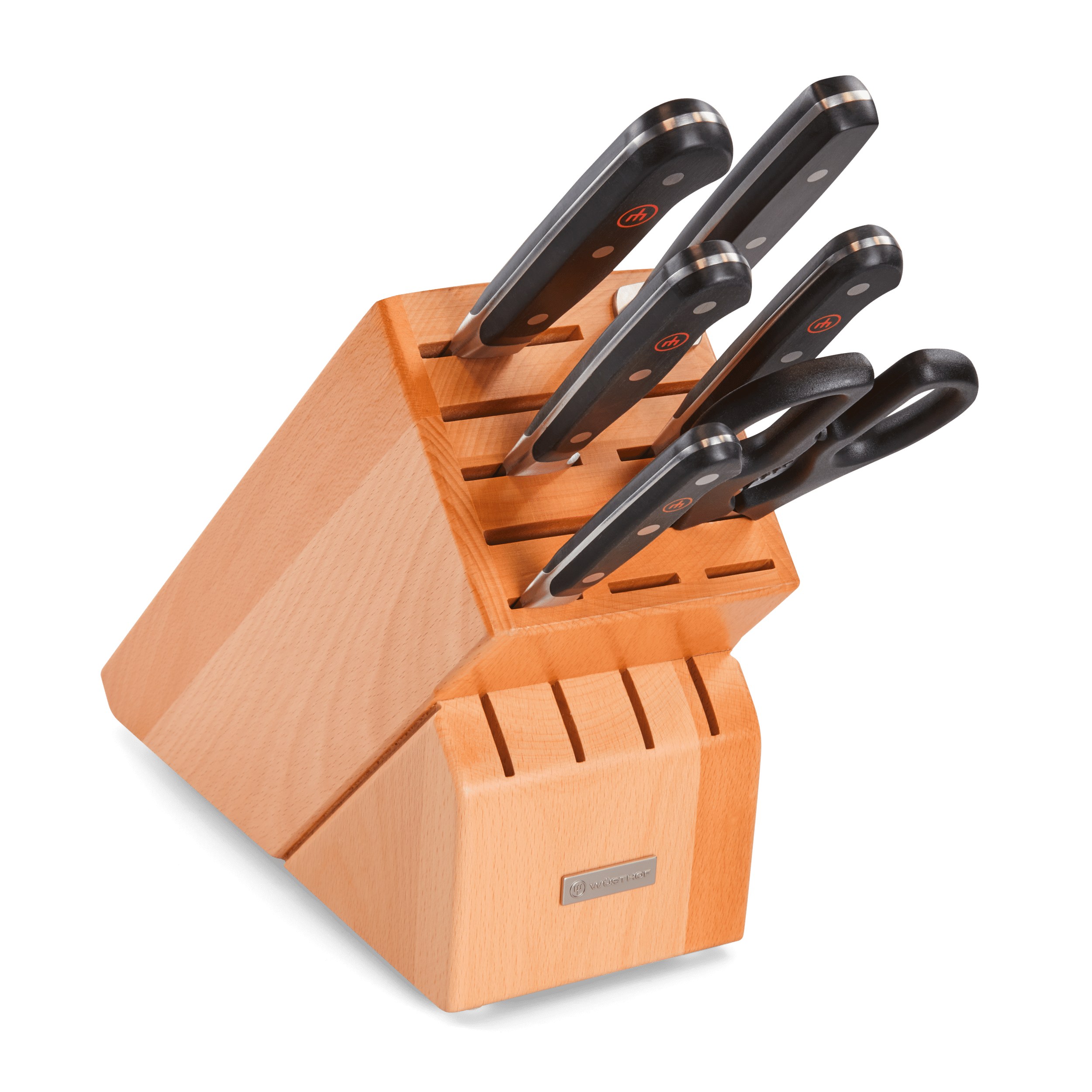
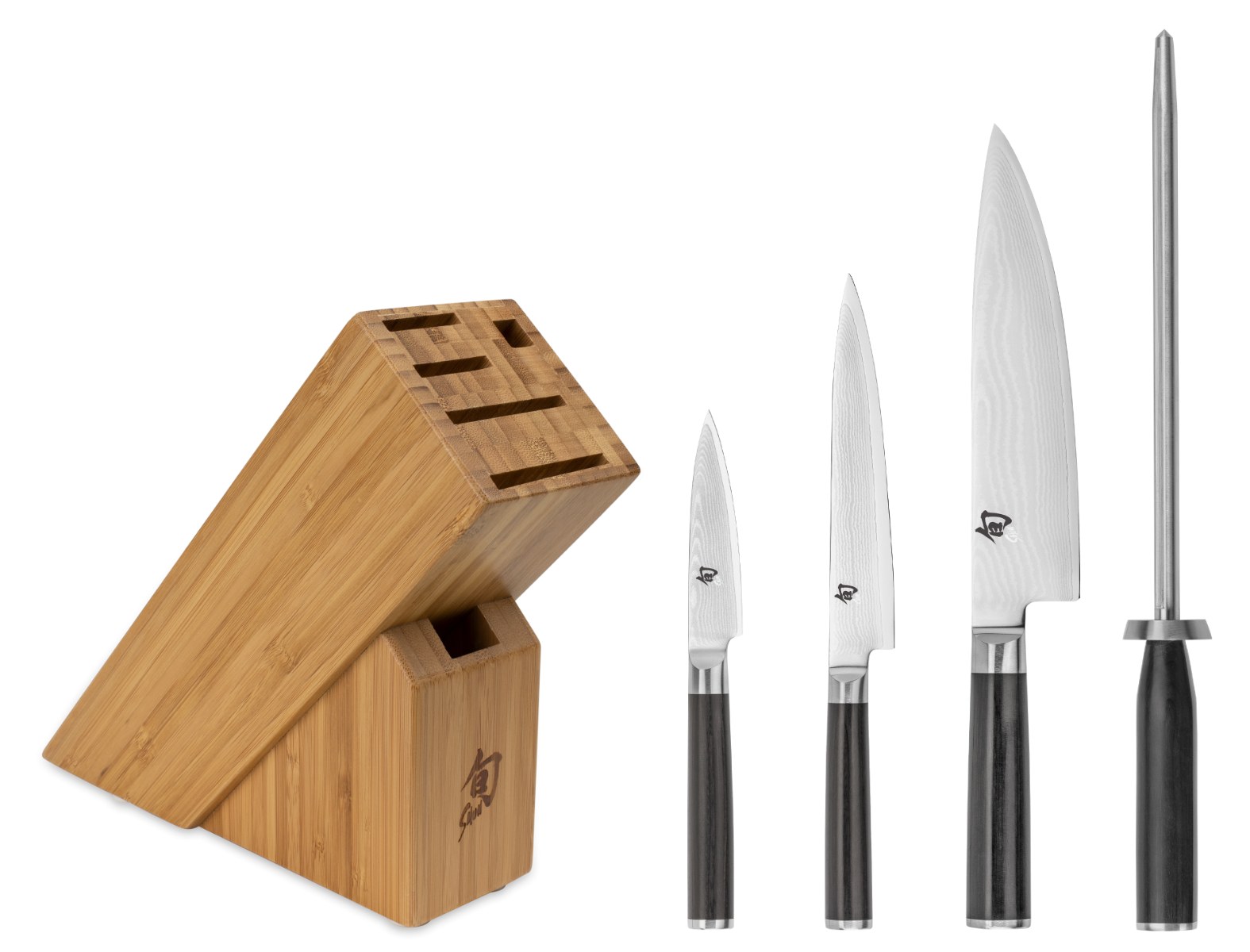
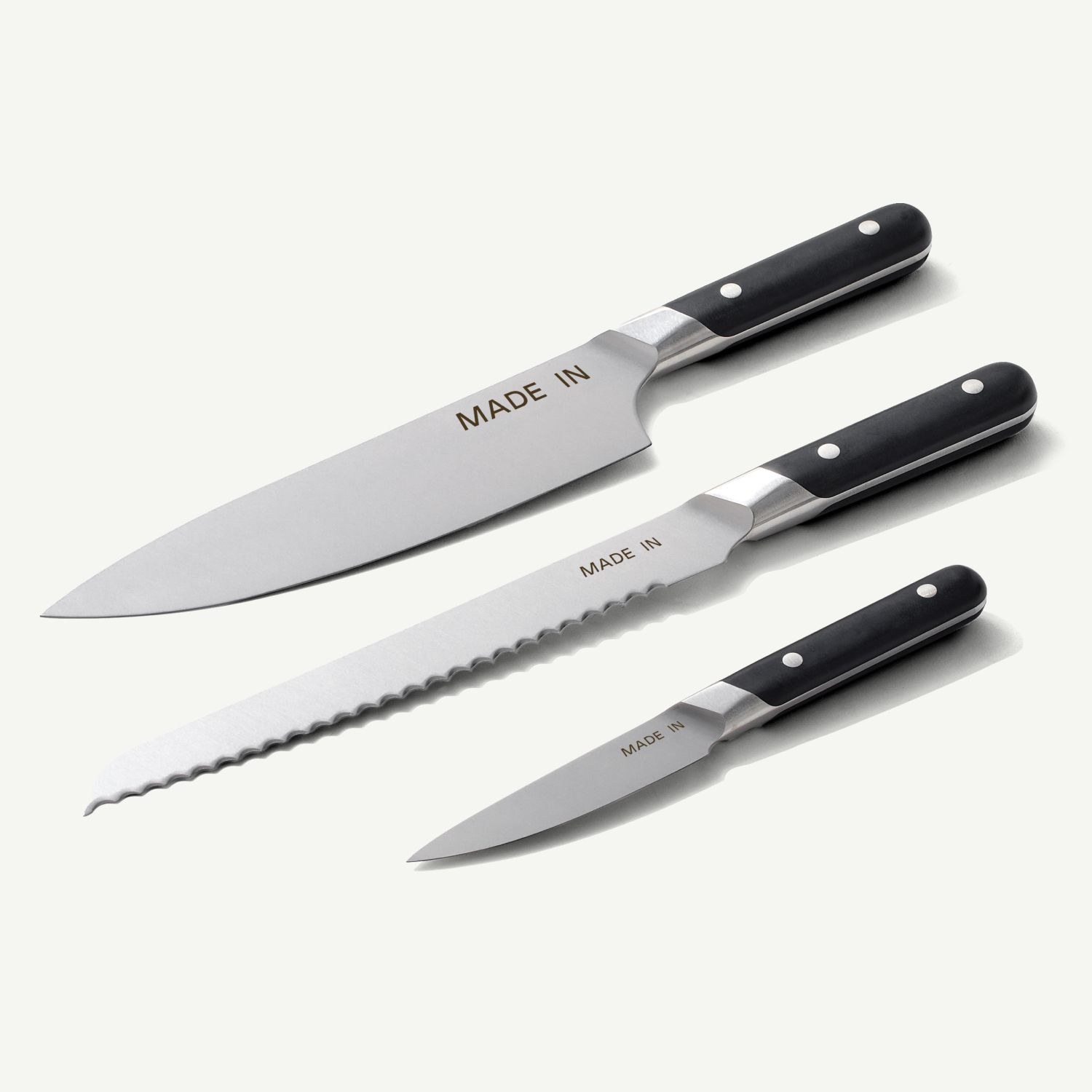
Buy the Wüsthof Classic 7-Piece ($520) if you want one forged set for the next twenty years — it is our #1 for its Solingen-forged blades, a complete no-filler lineup and lifetime backing. The Shun Classic 5-Piece ($439.95) is our Top Pick for cooks who prefer a thinner, harder Japanese edge and free lifetime sharpening from Kai USA. On a budget, the Victorinox Fibrox Pro 8-inch chef's knife ($67) is the value pick that embarrasses knives three times its price, and the Mercer Culinary Genesis 6-Piece ($178.32) is the cheapest block set we would actually recommend.
Questions, answered
Is a knife set or a single chef's knife the better buy?
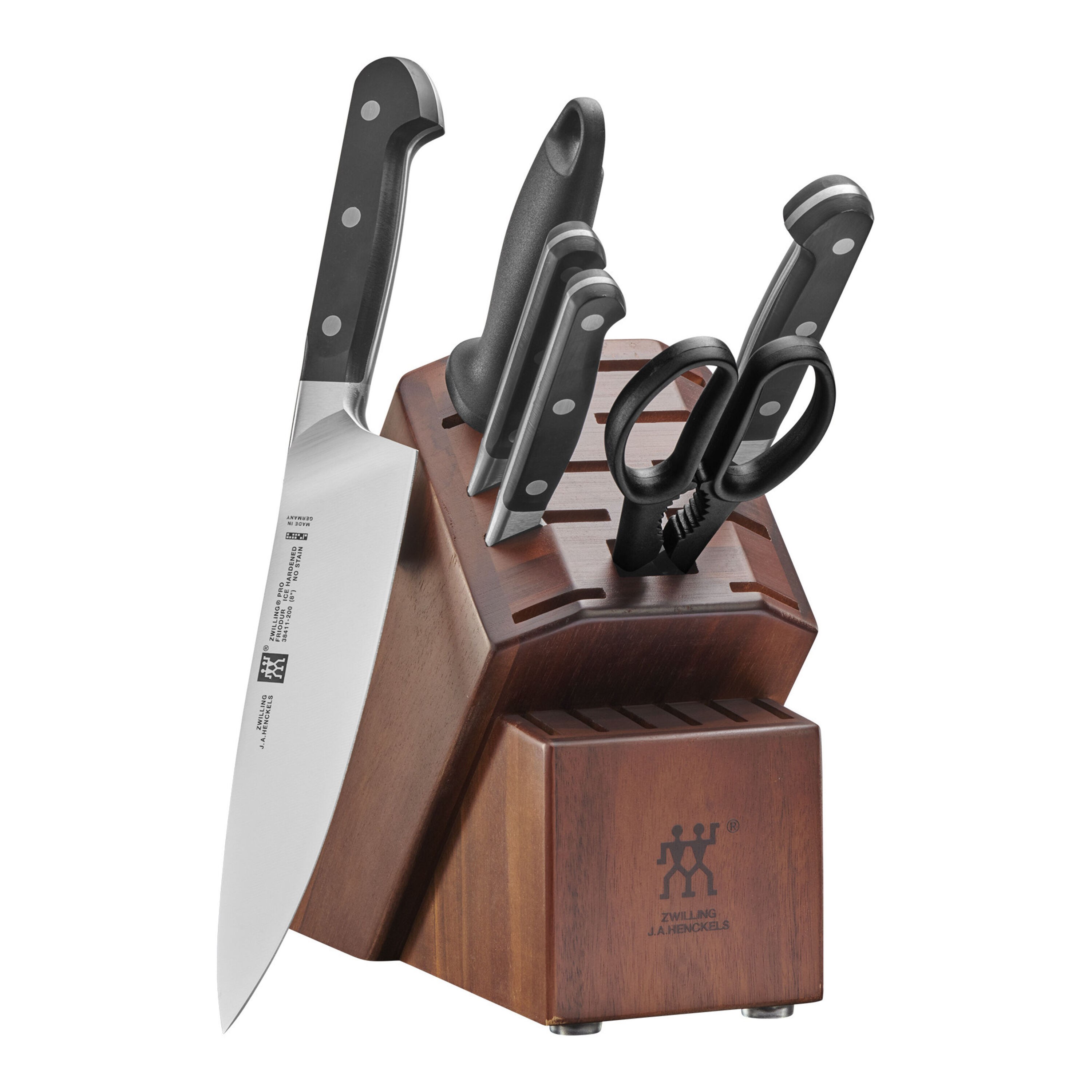
For most kitchens, a set wins on price per blade and built-in storage: the Wüsthof, Zwilling and Mercer sets here cost far less than their knives bought separately. But a single excellent chef's knife — the MAC MTH-80, Miyabi Kaizen II or Tojiro DP — plus an inexpensive paring knife covers 90% of real cooking and can out-cut a mid-tier set. Buy a set if you are starting from zero or replacing everything; buy singles if you already own a bread knife and shears you like.
What do the HRC hardness numbers on these cards actually tell me?
HRC is the Rockwell hardness of the blade steel. The German and French knives here sit at 56–58 HRC: tougher, more forgiving of twisting cuts, and quick to restore on a honing steel, but they roll their edges sooner. The Japanese blades at 60–62 HRC (Shun, Miyabi, MAC, Tojiro) take a finer, keener edge and hold it longer, but the harder steel can chip on bone, frozen food or a glass cutting board. Neither is 'better' — match the hardness to how carefully you cook.
Forged vs. stamped knives — does it really matter?
A forged blade is shaped from a single heated billet, which allows a full tang, a bolster and denser steel that holds an edge longer; every set in the top half of this ranking is forged. A stamped blade is cut from a sheet, so it is lighter and cheaper — the Victorinox Fibrox Pro proves a well-designed stamped knife can still be excellent, but it needs honing far more often. At equal steel quality, forged wins on longevity; stamped wins on price and weight.
Can I put these knives in the dishwasher?
Only one pick here is genuinely dishwasher safe: the Victorinox Fibrox Pro, whose thermoplastic handle and stamped blade shrug off machine washing (and it is NSF certified for commercial kitchens). Every forged and Japanese knife on this list is hand-wash only — dishwasher heat, detergent and jostling against other items dull edges, swell wooden handles and can chip hard Japanese steel. Wash, dry and store; it takes thirty seconds.
How do I keep an edge between sharpenings?
Hone little and often: a few strokes on a honing steel (included with the Wüsthof, Shun, Zwilling and Mercer sets) before cooking realigns the edge without removing metal. Actual sharpening on a whetstone or by a professional is needed only once or twice a year for home use. Shun owners get a head start — Kai USA sharpens Shun knives free for life; you pay only the shipping. Store knives in their block or on a magnetic strip, never loose in a drawer.
Prices are typical US street prices observed during
research and change often — check the retailer for the current price.
ARI may earn a commission from links on this page; commissions never
change a score. See the affiliate
disclosure and methodology.