The verdict
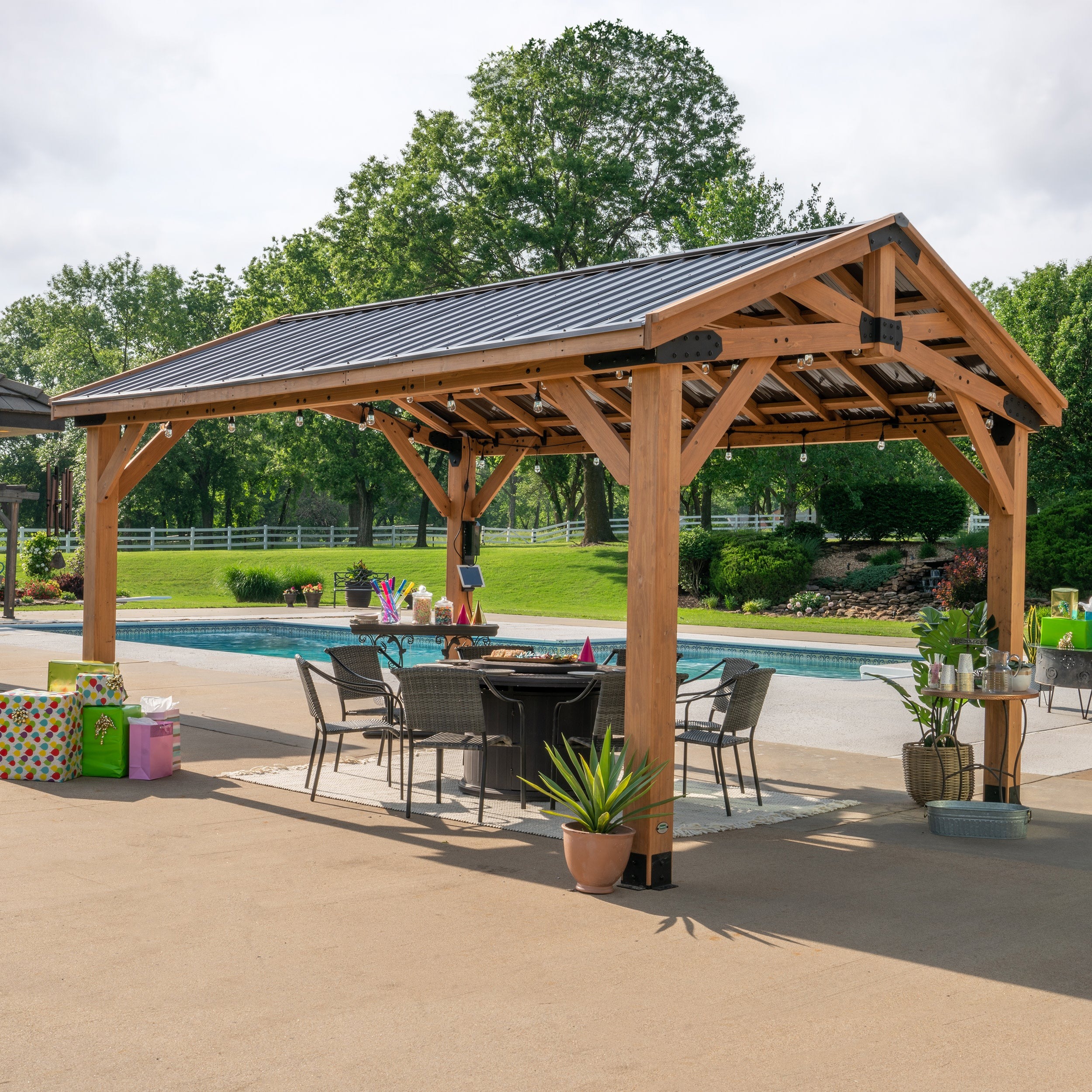
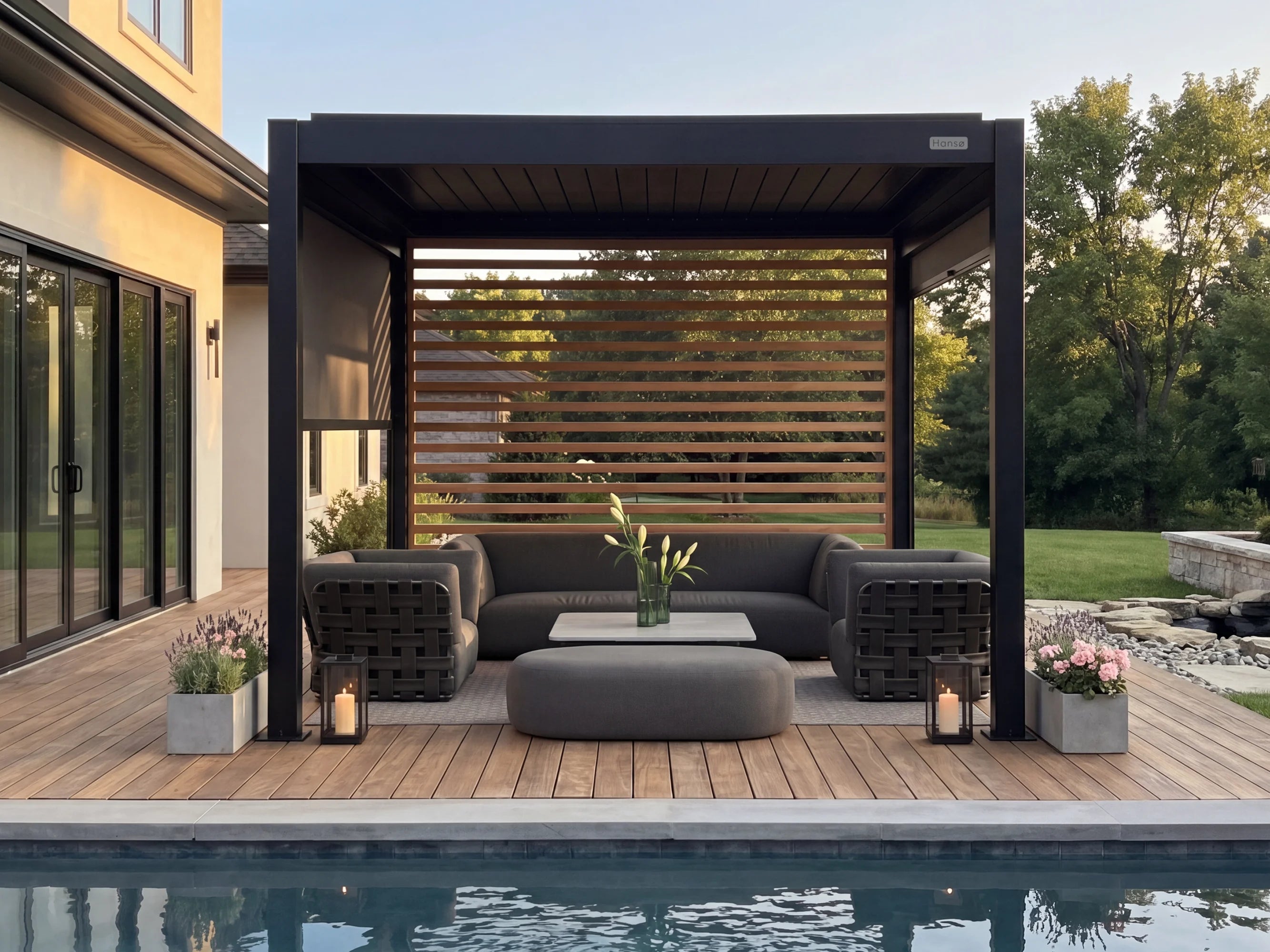
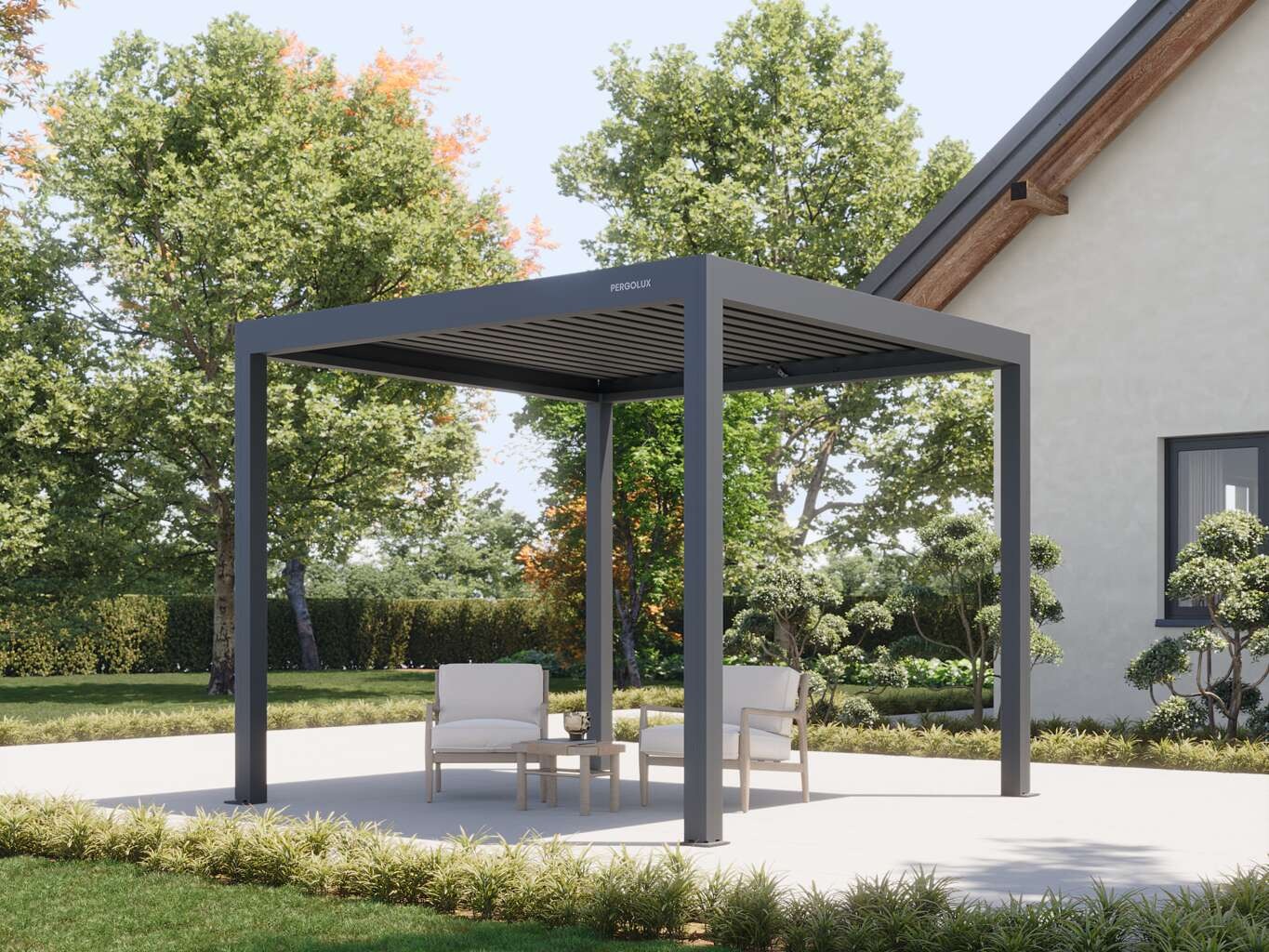
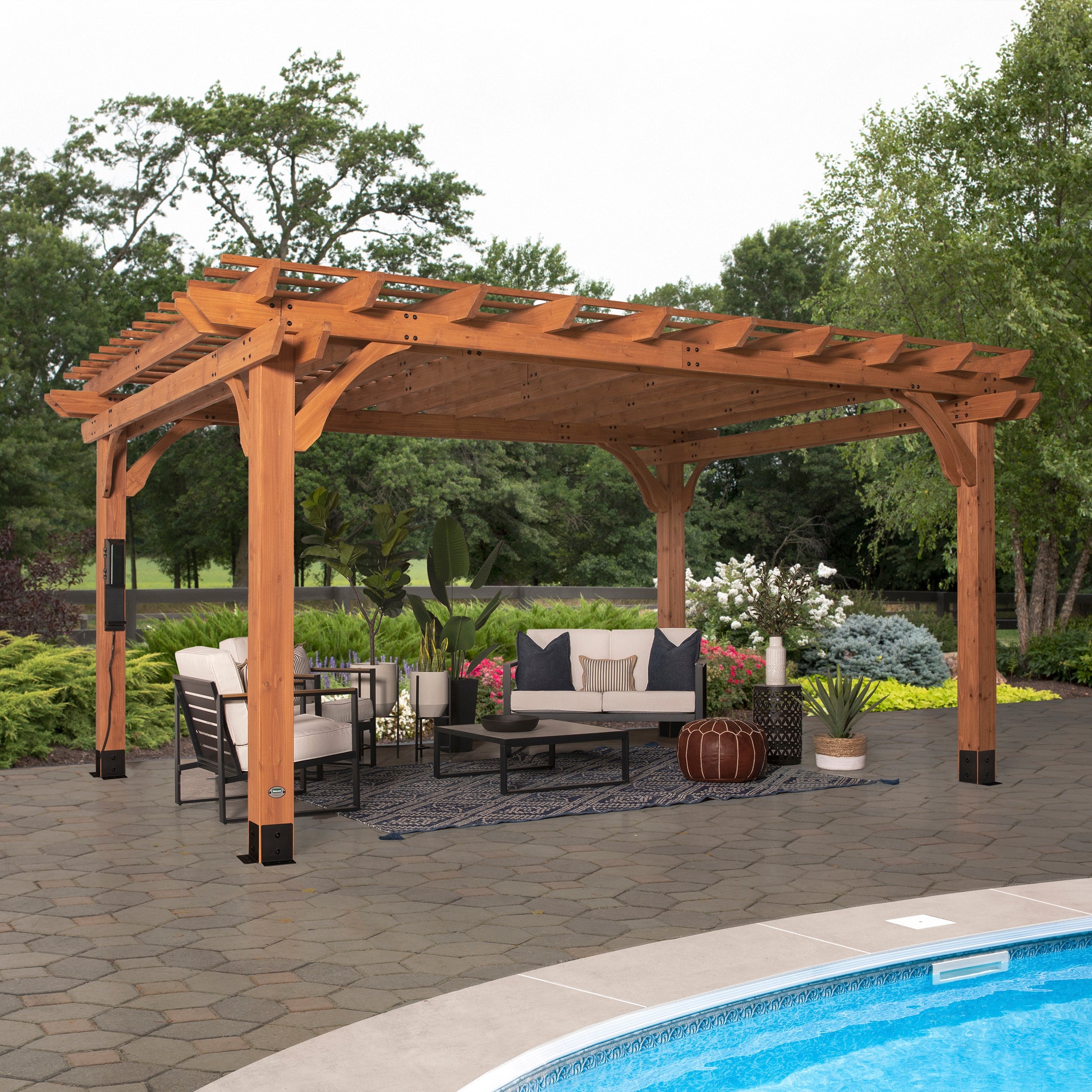
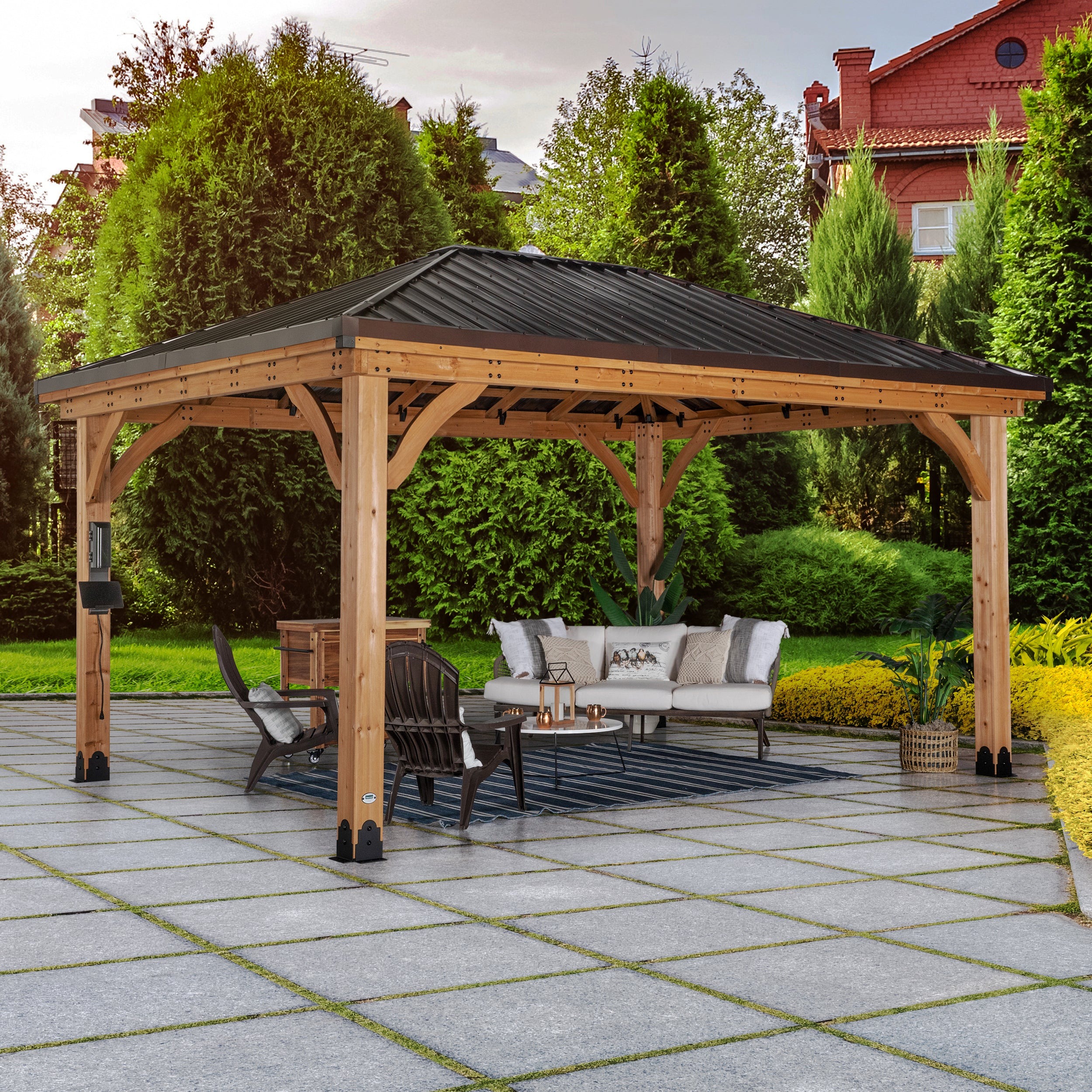
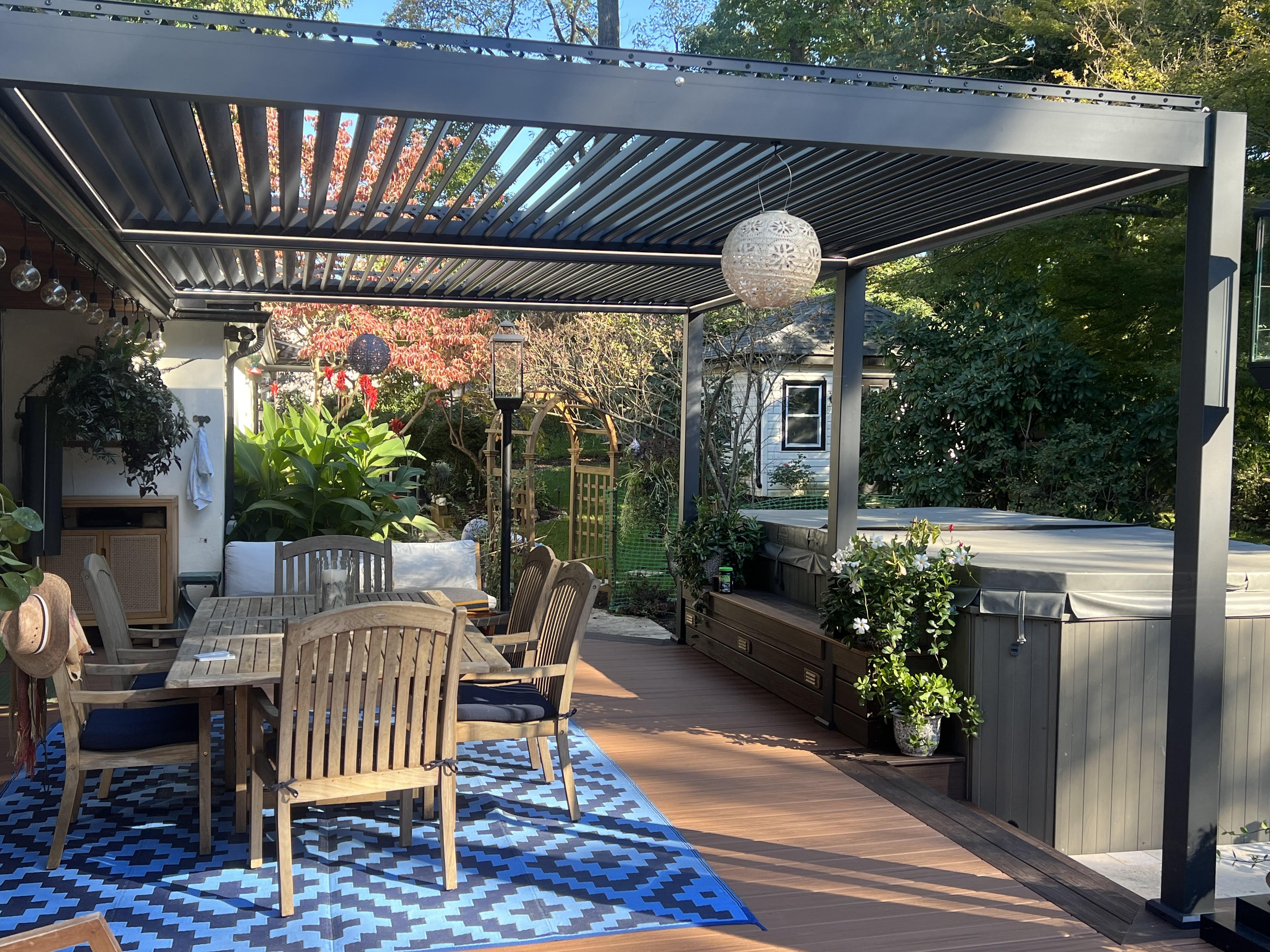
The Backyard Discovery Norwood 16x12 takes #1 because it publishes the numbers that matter — 100 mph wind and 10,600 lb of roof snow load when anchored as directed — under a 29-gauge steel roof on 6x6 cedar posts, with a 5-year warranty and a real US support line, at $2,999. Our AmRank Top Pick is the Hanso PRO+ at #2, the strongest louvered pergola here (120 mph, 25 psf, 10-year warranty, hand-cranked so there is no motor to fail). The #4 Backyard Discovery Beaumont pergola offers the same 100 mph Pro-Tect testing and 5-year warranty in an open cedar pergola at $1,699 — the most verified structure per dollar in the list, for buyers who want shade and air rather than a roof. At the premium end, PERGOLUX and BON sell genuine engineering, but read their fine print: PERGOLUX's own pages disagree on wind figures by model, and BON's warranty term differs between its site and its retailers, and both are flagged where they appear.
Questions, answered
Do I need a permit — and will my HOA care?
Often, yes to both, and this is the step buyers skip until a letter arrives. Many US jurisdictions treat a freestanding structure over a certain size (commonly 120-200 sq ft, which covers most of this list) or anything permanently anchored as an accessory structure needing a permit, setback compliance, and sometimes engineered drawings — which is one reason published wind and snow ratings matter: they are what a building department asks for. HOAs frequently regulate height, color, and placement even where no permit is required; Purple Leaf prints an HOA warning on its own pergola pages. Check both before you order, not after the freight truck leaves: returning a 900 lb kit is nobody's idea of a weekend.
How long does assembly really take with two people?
Longer than the box says. Manufacturers quote optimistic figures — Hanso says two people and about four hours for its louvered kit, and the Costco Mirador listing says roughly four hours — but owner reports for the big cedar gazebos consistently run a full weekend: one Sunjoy Kingston owner's account describes about 10 hours across two days for two people, and the 16x12 Backyard Discovery models ship at 550-930 lb in multiple boxes with hundreds of fasteners. Budget a weekend for anything 12x16 or larger, a second pair of hands for roof panels and louver sections (several steps genuinely need three people or a ladder each), and use the BILT app instructions where offered. Professional assembly is sold for the Backyard Discovery line and typically costs several hundred dollars — a fair trade if the alternative is a half-built frame in a storm.
Can I anchor it to a lawn, or does it need a slab?
The wind ratings on this page are anchored ratings. Backyard Discovery's 100 mph figure, PERGOLUX's figures, and Purple Leaf's 72 mph all assume the posts are bolted to a hard surface as directed — Purple Leaf states its rating applies 'when fully secured by expansion screws on hardened floors,' and Domi specifies M6 expansion bolts into a deck or concrete. On grass, a kit screwed to ground stakes or left freestanding has no verified wind rating at all, whatever the box says, and gazebo roofs act as sails. If you have no slab, the honest options are poured concrete footings at each post (the common permit-friendly route) or accepting that the structure is fair-weather only. Never rely on weight alone: even a 900 lb gazebo can walk and lift in a gust front.
I live in hurricane country. Which of these can I actually leave up?
Read the rating, then read its conditions. The strongest published figures here are Hanso's 120 mph on the PRO+ and the 100 mph Pro-Tect rating on the Backyard Discovery cedar line — both are test ratings for the structure anchored exactly as directed, with louvers/roofs in the specified position, not a promise that your installation matches the test or that flying debris is covered. Louvered models publish different figures by position: BON rates its Villa at 80 mph with louvers closed, and PERGOLUX's own pages state figures from 68 mph on one motorized model to 165 mph in brand-level claims — that spread is exactly why we score the model page, not the brand banner. In a forecast hurricane, the correct move for any kit on this list is still to secure furniture, open or close louvers as the manual directs, and treat the rating as a safety margin, not an invitation.
Pergola or gazebo — which should I actually buy?
Decide by rain, not by looks. If the space must stay usable in a straight-down rain — dining set that lives outside, a hot tub you use in winter — buy the gazebo: a fixed steel roof sheds water off the edges and carries a published snow load. If the point is adjustable shade over a patio you use in fair weather, a louvered pergola is the better tool: louvers angle for morning and evening sun in a way no fixed roof can, and open fully for stargazing or to let winter sun through — but accept that wind-driven rain enters, snow figures assume you manage the roof as directed, and 'rainproof' in louvered marketing means the closed louvers drain a normal shower, not that the space is a room. The classic open pergola (the Beaumont) makes no rain claim at all, and for a sunny, breezy lot that honesty is a feature.
Each price is the verified selling price for the exact size named in that product's name and chips, checked at the stated seller in October 2026 and rounded to whole dollars. Other sizes of the same model cost more or less; anchoring hardware, concrete work, permits and professional assembly are extra where noted. Prices are typical US street prices observed during research and change often — check the retailer for the current price. AmRank may earn a commission from links on this page; commissions never change a score. See the affiliate disclosure and methodology.